
BREAKDOWN & REPAIRS

By UK Hot Tubs

From breakdowns to repairs on most makes and models of Hot Tubs or Swimspas, UK Hot Tubs has the expertise to diagnose and repair issues efficiently. Whether it’s a broken pump, not heating, a leak or an error has appeared on the topside controller and with access to a reliable network of trusted suppliers, we ensure high-quality parts and swift repairs to get your hot tub back in perfect working order.

Our professional and friendly team takes the stress out of hot tub repairs, so you can sit back, relax, and enjoy your spa once again.
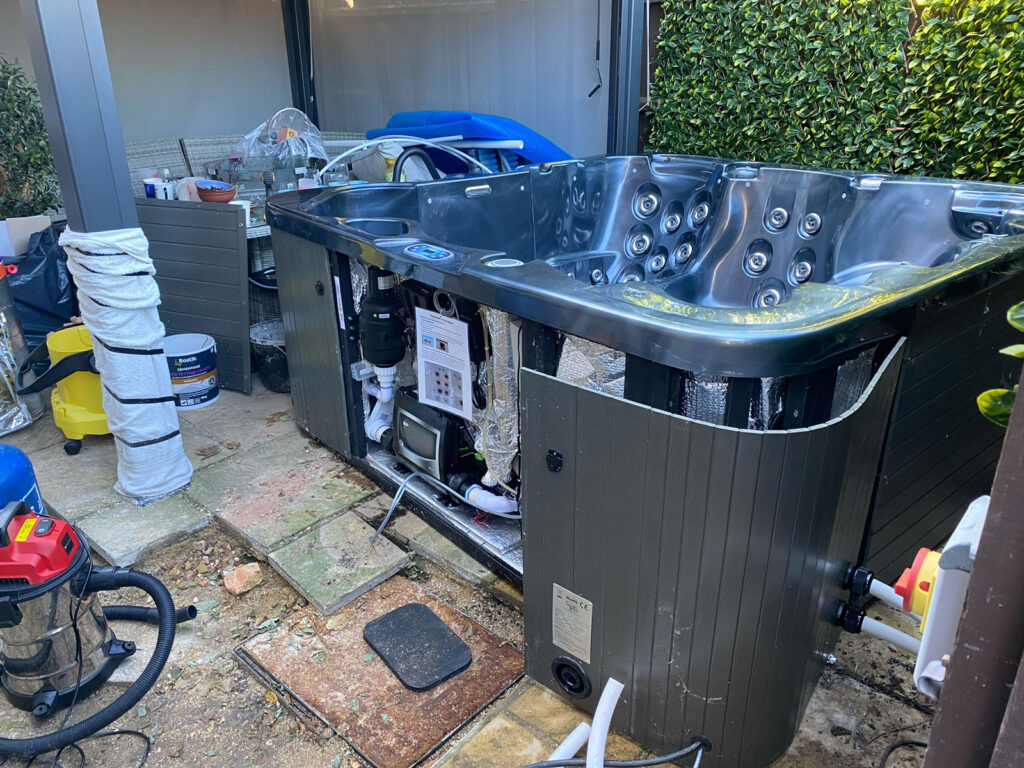
Hot Tub repair

Repairs and breakdowns WE OFFER

We offer a simple call out policy to diagnose a fault or repair.

Our Call Out is for technical issues with your Hot Tub or SwimSpa.

When a fault or repair is diagnosed, we can on occassion fix this on the initial visit if time allows and we have the required parts.

On occassions if we can repair during the visit we may need to add more labour costs to the initial call out

All prices include VAT

Just click on the tab below for more Information

Breakdowns/Repair/Call Out

When something has gone wrong and you need a technician to attend.

What’s Included?

  • Call-Out Cost: £120 covers the first hour within a 50-mile radius of our office. Additional mileage fees may apply if we agree to travel beyond this area.
  • Labour Charges: After the first hour, labour is charged at £45 per additional half-hour.
  • Diagnostics: We will assess the issue and provide advice on the problem.
  • Repairs on Site: If the necessary parts are available on our van, we will fix the issue immediately.
  • Parts Availability: If the original parts are unavailable, we will recommend suitable alternatives.
  • Guarantees:
    • Our supplied parts come with a standard 1-year guarantee from the date of installation.
    • We also provide a 1-year workmanship guarantee for added peace of mind.
  • Expert Technicians: Our team has years of experience diagnosing and repairing hot tubs, ensuring you’re in good hands.
  • Additional Checks: We will inspect your hot tub for any underlying issues and provide advice.
  • Help Us Help You: To improve the chances of a swift repair, please provide as much information as possible. Photos or videos of the issue can be especially helpful.

Labour Rates Explained

Labour over the 1st hour included in the call out

Our Labour Rates 

Covers up to 0.5 hours

  • Labour Charges: If a fault is found and can be fixed on the same day, additional labour is charged at £45 per half-hour.

What’s Included in the Labour

Repairs and Breakdown involves checking and cleaning your equipment systems to ensure it’s working efficiently. It’s very difficult to give an exact quote on the labour required to fix an issue but we wilkl aleways keep you informed when on a call out if any labour is required over and above the initial call out charge.

Why is extra labour required?

  • The 1st hour is usually enough time to diagnose a fault
  • Checking for leaks can be a bit tricky and may need more labour
  • Inspecting electrical faults that are intemittent can sometimes require more time.
  • Scale formation can sometimes prevent exact diagnostics and therfore the scale may need removing and may need more time  

Contact Us for a more detailed quote or to find out more

AREAS WE COVER

Counties We Serve

  • Hampshire
  • East Sussex
  • West Sussex
  • Kent (Partial Coverage)
  • Dorset (Partial Coverage)
  • Wiltshire
  • Surrey
  • Oxfordshire (Partial Coverage)
  • Hertfordshire (Partial Coverage)
  • London
  • Berkshire

Covered Postcodes

  • PO Area
  • SO Area
  • Area 1 (BN, RH, GU, RG, BH, SP)
  • Area 2 (SN, HP, AL, OX, HA, KT, SM, CR, BR, DA, WD, UB, SL, TW)
  • Area 3 (London) (SW, SE, NW, N, E)
  • Area 4 (DT, BA, BS, RM, EN, IG, SS, CM, ME, GL, TN)

Contact Us for a more detailed quote or to find out more

COMMON HOT TUB FAULTS & HOW TO ADDRESS THEM

Hot tubs are sophisticated systems, and occasional faults can arise. Below are some of the most common issues, along with tips for diagnosing and resolving them. If you experience any of these problems and require professional assistance, please feel free to get in touch with our team. Our experts are here to help diagnose and resolve your hot tub issues promptly and efficiently.

  • Ensure your filters are clean and in good condition.
  • Check if the circulation pump is moving water when the heater is active.
  • Confirm that the water level in the hot tub is sufficient.
  • If your system has a pressure switch, it might need adjustment.
  • Bleed air from all pumps and the heater to ensure proper water flow.
  • Make sure the filters are clean and not obstructing circulation.
  • Check if the pump is functioning and circulating water effectively.

Sensor faults are often due to sensor failure, but they can also indicate a problem with the PCB (Printed Circuit Board).

  • Identify when the issue occurs – is there a specific pattern?
  • If the spa trips when pressing a particular button, the component linked to that function is likely the cause.
  • If the spa trips when the heat indicator activates, this may suggest a heater-related problem.
  • Measure how much water is being lost over 24 hours or a week.
  • Remove the inspection panel to locate the source of the leak.
  • Check that all unions and fittings are tight and secure.

Possible Causes:

  • High Calcium Content:
    • Hard water with excess calcium leads to scale formation.
  • High Total Alkalinity & pH:
    • Alkalinity above 120 ppm and pH above 7.8 increase the risk of scaling.
  • Evaporation & Heat:
    • Hot water speeds up calcium deposits, especially in high-mineral water areas.

Solutions & Maintenance Tips:

Test and Adjust Water Chemistry

  • Check and maintain proper levels:
    • pH: 7.2–7.8 (lowers scaling risk).
    • Total Alkalinity: 80–120 ppm (prevents excessive mineral buildup).
    • Calcium Hardness: 150–250 ppm (ideal for hot tubs).
  • If levels are too high, use a pH decreaser or scale control product.

Remove Existing Scale

  • Drain the spa if heavy scaling is present.
  • Scrub off deposits with a non-abrasive sponge or a vinegar-water solution.
  • Refill with fresh water and rebalance the chemistry.

Use a Scale Control Product

  • Add a scale and stain remover weekly to prevent mineral deposits.
  • Ideal for areas with hard water or frequent scaling issues.

Use a Pre-Filter When Filling the Hot Tub

  • A hose filter can remove excess minerals before they enter the spa.
  • Especially helpful in regions with hard water.

Monitor & Maintain Water Circulation

  • Run jets and pumps daily to prevent stagnant water where scale can form.
  • Clean and inspect jets for buildup every 1–2 weeks.

Regular Filter Maintenance

  • Rinse filters weekly to prevent calcium buildup.
  • Deep clean filters monthly with a filter cleaning solution.
  • Replace filters every 12–18 months if they become clogged with mineral deposits.

Consult Your Dealer for Prevention Tips

  • If scale buildup continues, ask about water softening solutions or specialized chemicals.
  • Consider a whole-house water softener if hard water is a persistent issue, this can be mixed 50/50 with the hard water for the ideal solution.
  • Poor water chemistry, ensure there is adequate sanitiser like Chlorine and Bromine, sometimes a shock treatment will help clear any organic matter.
  • Clogged or dirty filters are sometimes the cause, so make sure the filters are clean or replace them if over a year old..
  • If your spa water is getting cloudy, either your chemical balance or sanitizer level is off. Test the water’s pH or add more sanitizer to get things clean again. If neither of those help, check the filter to make sure it’s still doing its job, if your still not sure then contact us for more advice.
  •  Squealing sounds indicate that the bearings may have worn out
  • Grumbling noises may mean that you need to make a few adjustments
  • A noisy hum means you should check the pumps for loose bolts and screws
  • Sometimes something can get stuck in the empellor or wet end of the pump and a more thorough investigation may be required by a professional
  • Check the gate valves are fully open and remove any debris that could be clogging them up.
  • Problems with the pumps can affect your jets and the performance
  • For more advice, please contact us.
  • Clogs in the jets:

    • Caused by dirt, debris, or foreign materials, such as calcium buid up or small bits of debris from the manufacturing process.
    • Restricts the flow of water and air, reducing jet effectiveness.
  • Damage to the jets:

    • Can result from impact, wear and tear, or chemical exposure.
    • May occur due to accidental hits or improper cleaning.
    • Depending on the extent, jets may need repair or replacement.
  • Wear and tear:

    • Parts inside the jets degrade over time with regular use.
    • Worn-out components reduce jet performance.
    • Replacement is often necessary to restore proper function.
  • For more advice, please contact us.

Causes of Smelly Water in Hot Tubs:

  • Bacterial Growth:

    • Occurs due to inadequate sanitation and cleaning.
    • Thrives in warm, humid environments.
    • Produces offensive odors and can be harmful to health.
  • Chemical Imbalances:

    • pH levels that are too high or too low can cause strong chemical smells.
    • Improper chlorine or bromine levels can lead to ineffective sanitation and odors.
  • Organic Matter Build-up:

    • Sweat, lotions, oils, and other personal care products can accumulate in the water.
    • Organic matter feeds bacteria, contributing to foul odors.

Steps to Fix Smelly Water:

  • Check Sanitation:

    • Ensure proper cleaning and sanitization.
    • Use a suitable sanitizer (chlorine, bromine, or other recommended products).
    • Shock the water weekly or after heavy use to kill bacteria and break down contaminants.
  • Check pH and Chemical Levels:

    • Test the pH level regularly (ideal range: 7.2 – 7.8).
    • Ensure sanitizer levels (chlorine: 1-3 ppm, bromine: 3-5 ppm) are within the recommended range.
    • Adjust as needed using pH increasers, pH reducers, or sanitizer.
  • Check for Organic Matter:

    • Inspect the water for visible oils, lotions, or debris.
    • Use a hot tub enzyme cleaner, conditioner or a product like Aquafinesse  to break down organic material.
    • Clean the waterline and interior surfaces regularly.
  • Check and Clean the Filters:

    • Rinse filters weekly with clean water to remove buildup.
    • Deep clean filters monthly using a dedicated filter cleaner.
    • Replace filters annually or as recommended by the manufacturer.
  • Drain and Refill the Water:

    • Drain and clean the hot tub every 3-4 months, or if the odor persists.
    • Clean the shell thoroughly before refilling with fresh water.
    • Balance the water chemistry immediately after refilling.

Additional Maintenance Tips:

  • Cover Care:

    • Keep the hot tub cover clean and dry to prevent mold and mildew.
    • Allow the cover to air out periodically to prevent moisture buildup.
  • Water Circulation:

    • Run the circulation pump daily to keep water moving and prevent stagnation.
    • Ensure all jets are functioning correctly for optimal water flow.
  • User Guidelines:

    • Encourage users to shower before entering to reduce organic contaminants.
    • Avoid using heavy lotions or oils before soaking.
  • Regular Testing:

    • Test water chemistry 2-3 times a week, especially during frequent use.
    • Keep a supply of test strips or a digital water tester for accuracy.

Possible Causes:

  • Low pH:
    • Acidic water (pH below 7.2) can cause eye irritation and discomfort.
  • Low Sanitizer Level:
    • Insufficient chlorine or bromine allows bacteria and contaminants to thrive.
  • High Chlorine or Bromine Levels:
    • Excessive sanitizer can cause redness and burning in the eyes.
  • Chemical Imbalances:
    • Improper water balance can create chloramines (combined chlorine), which irritate eyes.
  • Dirty or Contaminated Water:
    • Organic matter like sweat, lotions, and debris can cause irritation.

Solutions:

Test and Adjust pH Levels

  • Use test strips or a digital tester to check pH.
  • Keep pH between 7.2 and 7.8 for optimal comfort.
  • Use a pH increaser or pH decreaser as needed.

Check and Maintain Sanitizer Levels

  • Chlorine should be between 1–3 ppm, and bromine 3–5 ppm.
  • If sanitizer is low, add more to maintain proper levels.

Shock the Water

  • Use a non-chlorine shock for bromine hot tubs or a chlorine shock for chlorine hot tubs.
  • Shocking breaks down contaminants that cause irritation.
  • Shock weekly or after heavy use.

Clean the Filters

  • Rinse filters weekly and deep clean them monthly to remove debris.
  • Replace filters every 12–18 months if worn out.

Ensure Proper Water Circulation

  • Run jets for at least 15–30 minutes daily to help distribute chemicals evenly.
  • Check for clogged jets that may impact water flow.

Drain and Refill If Necessary

  • If irritation persists, drain and thoroughly clean the hot tub.
  • Refill with fresh water and rebalance chemicals.

Consult Your Dealer

  • If the issue continues despite proper adjustments, seek expert advice.

Possible Causes:

  • Unsanitary Water:
    • Bacteria, algae, and organic contaminants can cause skin irritation or rashes.
  • High Free Chlorine Levels (>5 ppm):
    • Excessive chlorine can lead to dry, itchy skin or chemical burns.
  • Chemical Imbalances:
    • Incorrect pH or alkalinity can make the water harsh on the skin.
  • Residual Soap, Lotions, or Sweat:
    • Personal care products can mix with chemicals and cause skin sensitivity.

Solutions & Maintenance Tips:

Test and Balance Water Regularly

  • Use test strips or a digital tester 2–3 times a week to check chlorine, pH, and alkalinity.
  • Maintain proper levels:
    • Chlorine: 1–3 ppm (allow levels to drop below 5 ppm before using).
    • pH: 7.2–7.8 (prevents skin irritation).
    • Alkalinity: 80–120 ppm (stabilises pH).

Shock the Water to Maintain Sanitisation

  • Use a chlorine or non-chlorine shock weekly to eliminate bacteria.
  • Shock after heavy use or if water appears cloudy.

Allow Chlorine Levels to Normalize Before Use

  • If chlorine is above 5 ppm, wait until it drops to a safe level before entering.
  • Leave the cover off and run jets to speed up chlorine dissipation.

Keep the Hot Tub Clean

  • Wipe down surfaces weekly to prevent biofilm buildup.
  • Rinse and soak filters monthly in a cleaning solution.
  • Drain, deep clean, and refill the spa every 3–4 months to maintain water freshness.

Rinse Off Before Entering

  • Encourage users to shower before using the spa to remove lotions, perfumes, and sweat.
  • Avoid using heavily fragranced body products before soaking.

Consider Alternative Water Care Options

  • If chlorine sensitivity is an issue, talk to your dealer about alternatives like:
    • Bromine: Gentler on skin but still effective at sanitisation.
    • Mineral-based systems: Use silver or copper ions to reduce chemical use.
    • Ozonators or UV systems: Reduce reliance on chlorine while keeping water clean.

Consult Your Dealer for Expert Advice

  • If skin irritation persists despite balanced water, ask about alternative sanitisation methods.
  • Seek professional help for persistent water quality issues.

Possible Causes:

  • Possible Causes:

    1. Refilling Issues – If the tub was recently drained and refilled, air might have been trapped in the plumbing.
    2. Low Water Level – If the water level is too low, air can enter the system.
    3. Blocked or Clogged Filter – A dirty filter can restrict water flow and cause airlock.
    4. Loose or Leaky Pump Connections – Air can enter through loose fittings or leaks in the pump.
    5. Faulty Check Valve or Air Intake Issues – Some spas have check valves that may malfunction and trap air.

    Remedies:

    Bleeding the Air from the System:

    1. Turn Off the Power – Shut down the hot tub to avoid damage to components.
    2. Locate the Pump Union – Find the unions (large nuts) near the pump.
    3. Loosen the Union – Slightly open the union until air escapes and water starts to trickle out.
    4. Tighten and Restart – Once water flows, retighten the union and power on the hot tub.

    Purge the Air via Jets:

    1. Turn Jets On and Off – Repeatedly turn the jets on and off to push air through.
    2. Open Air Valves – If your hot tub has air control valves, open them while running the jets to force air out.

    Check Water Level:

    • Ensure water is above the filter intake to prevent further air intake.

    Clean or Replace the Filter:

    • Remove and clean the filter with a hose or soak it in a filter cleaner.

    Inspect for Leaks:

    • Check around pump connections, pipes, and unions for any leaks and tighten fittings if necessary.

    If these steps don’t resolve the issue, there could be a more significant problem with the pump or plumbing requiring professional inspection. Let me know if you need more details!

Hot Tub Losing Water But No Leak? What’s the Problem?

If your hot tub is losing water but you don’t see any visible leaks, it could be due to several factors such as natural evaporation, splashing, overflow, equipment malfunctions, or hidden leaks. Conditions like temperature, humidity, user activity, and faulty components (such as valves, pumps, or heaters) can contribute to water loss. At UK Hot Tubs, we recommend regular inspections and maintenance to help identify and resolve these issues before they become bigger problems.

Common Misconceptions About Hot Tub Water Loss

Many hot tub owners assume that water loss always points to a leak, but this isn’t always the case. Natural evaporation, splashing, and even body absorption can cause the water level to drop. In most cases, unless you’re splashing a lot, the most common cause of water loss will be evaporation. Let’s take a closer look at this issue.

1. Natural Evaporation

Evaporation is a daily process where water will gradually disappear from your hot tub without any visible signs. It’s the most common cause of water loss and is entirely normal. The best way to manage this is by using a hot tub cover that sits directly on the water’s surface to reduce the effects.

Things That Increase Evaporation

Evaporation is affected by both external and internal factors:

  • External Factors: Hotter air and higher wind speeds will cause more water to evaporate compared to cooler, still air. Areas with high humidity will experience less evaporation, while dry heat regions (like Arizona) will see much higher rates.

  • Internal Factors: Hot water evaporates faster than cold water, and the larger the surface area of your tub, the more water will evaporate. Increased usage also raises the surface area exposed to air, resulting in more evaporation.

Normal vs. Excessive Water Loss

On average, a hot tub will lose about 1-2 inches of water per week due to evaporation, but this can vary depending on the weather and other factors. If the water loss exceeds 2 inches per week, it may indicate a problem.

How to Measure Evaporation

To determine if your hot tub is losing water from evaporation or a potential leak, follow these steps:

  1. Fill your hot tub to its normal level and mark the water line.
  2. Turn off all jets and ensure the cover is on securely.
  3. Wait 24 hours without using the hot tub.
  4. Check the water level and measure any drop.
  5. Repeat this process for a week to calculate an average daily evaporation rate.

Multiply your daily rate by 7 to get the weekly evaporation loss. If it’s significantly higher than the typical 1-2 inches, you may need to inspect for leaks or equipment malfunctions. Be sure to consider environmental factors like weather conditions when evaluating the results.

2. Splashing and Overflow

This is the most obvious cause for many of us. If you’re dripping water when exiting the hot tub (who doesn’t?), or if children are splashing water out, it’s simply being carried out of the tub. Here are some tips to manage this:

  • Gently encourage people to avoid excessive splashing. Remember, it’s a hot tub, not a splash park.
  • Have people use the steps to exit the tub rather than stepping over the side. This helps reduce water loss by making the exit slower and less messy.

Additionally, if your hot tub is located on a wooden deck, be mindful of how much water gets onto the deck to avoid potential water damage.

What We Suggest at UK Hot Tubs

Regular maintenance, such as checking your hot tub cover, ensuring the water level is correct, and inspecting for equipment issues, can help prevent unnecessary water loss. If you’re noticing more water loss than usual, don’t hesitate to give us a call. We recommend checking for hidden leaks or possible pump malfunctions and performing a deep clean of your filter system.

By taking these simple steps and being aware of the common causes of water loss, you can keep your hot tub running efficiently and enjoy it without worrying about excessive water loss.

Black Friday Deals

Sale ends 1st December

All hot tubs to be delivered before we close for Christmas